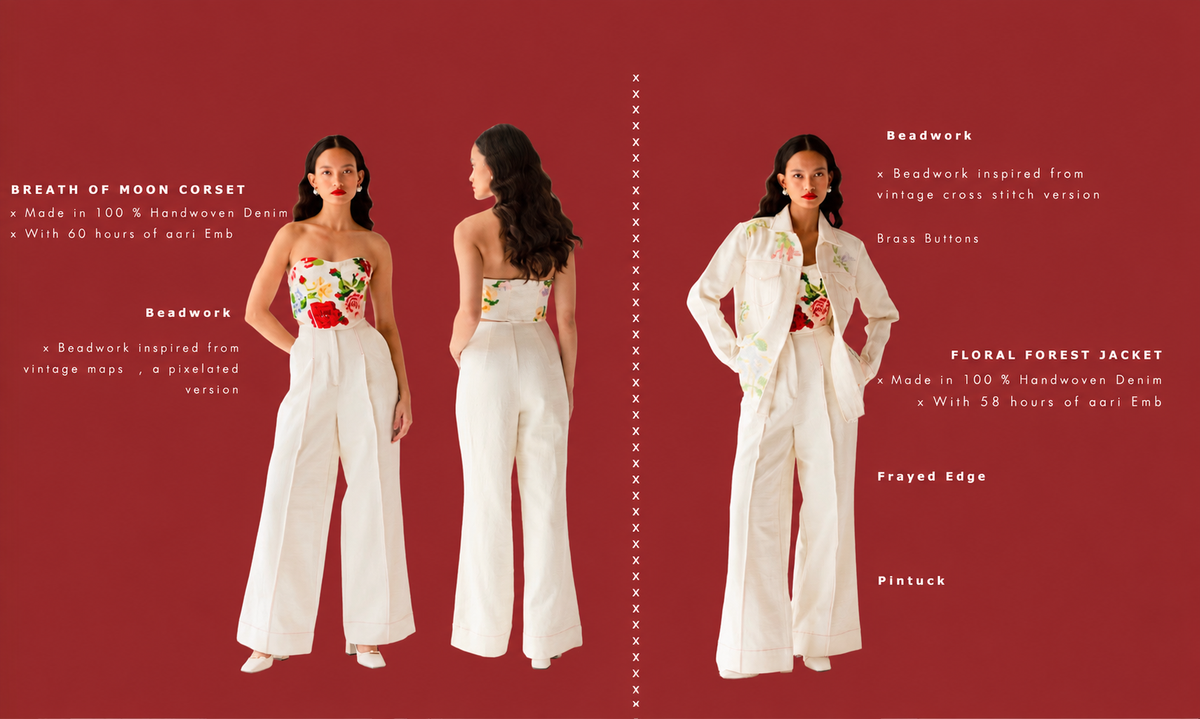
Ever wondered why some clothes just feel different, worth holding onto, worth talking about? A lot of the time, that comes down to how they were made. Some garments carry more than a design. They carry the time, skill and craftsmanship that went into creating them. This is at the heart of artisanal fashion, where the process of making becomes part of the story of the garment. This can include hand embroidery, small production runs and techniques passed down through generations.
What Does "Artisanal" Actually Mean in Fashion?
At its simplest, artisanal fashion means clothing shaped by skilled craftsmanship, specialised techniques and meaningful human involvement in the making process. The word comes from "artisan", meaning someone trained in a particular craft. In fashion, it points to garments where craftsmanship plays an important role in the stitching, detailing, finishing or other stages of production.
That is different from clothing produced primarily for speed and scale. Artisanal pieces can involve techniques such as hand embroidery, hand painting, hand weaving or other specialised forms of craft. So when people ask what "artisanal" really means, the answer is not simply about whether something is handmade. It is also about how it was made, the expertise involved and the amount of skill invested in the process.
India is a particularly rich example. Few countries have a craft history as diverse as India's, with regional embroidery styles, weaving traditions and hand-finishing techniques passed down through generations. Today, designers are finding new ways to bring that heritage into modern silhouettes, allowing traditional craftsmanship to remain relevant to contemporary wardrobes.
The Craftsmanship Behind Artisanal Clothing
The appeal of artisanal fashion lies in the skill and knowledge behind each piece. It is the training, years of practice and hands-on expertise that can be seen in the finished garment.
Hand Embroidery and Traditional Techniques
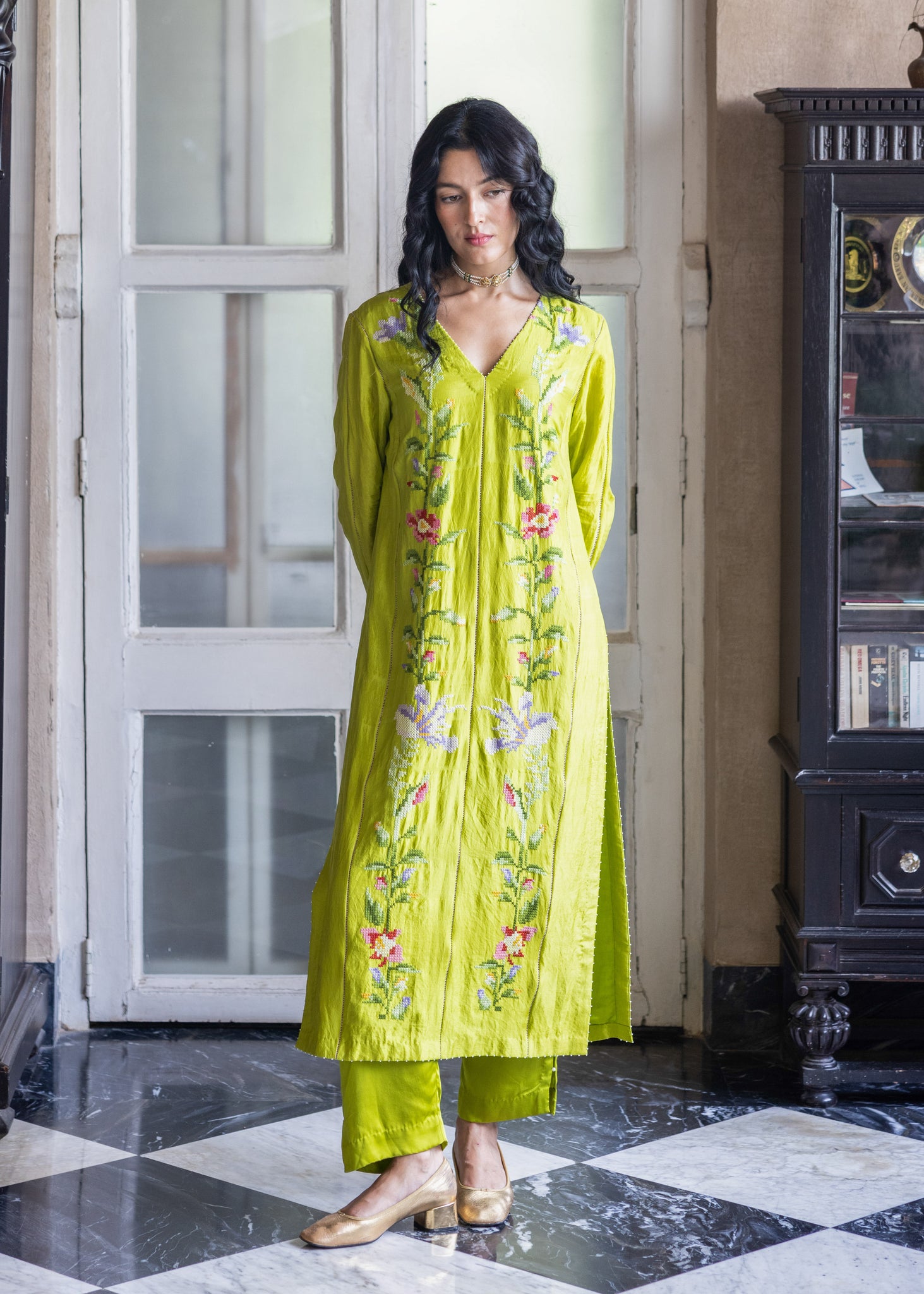
If you are looking for a clear expression of craftsmanship in a garment, hand embroidery is one of the most recognisable. India alone has an incredible range of embroidery traditions, from mirror work and chikankari to regional cross-stitch styles. Each technique requires specialised knowledge and practice to execute well.
Hand embroidery can take considerably more time than machine-applied decoration because individual stitches and details require attention from a skilled maker. Subtle variations in stitching or placement can also give handcrafted garments an individual character.
Because this kind of handwork is time-intensive, it may not appear across every piece in an entire collection. Many artisanal labels combine hand-finished pieces with other techniques depending on the design. Ode To Odd's Kurta Sets and Odhani collections are examples where selected pieces feature hand cross-stitch embroidery, while others use different techniques. Looking closely at individual pieces is therefore important when understanding what goes into a garment.
Small-Batch and Made-to-Measure Production
Another characteristic often associated with artisanal clothing is scale. Instead of producing thousands of identical pieces, artisanal brands may work in smaller batches or limited quantities. Some may also offer made-to-measure fashion, where a garment is created around individual measurements rather than a standard size chart.
This can create a more considered approach to production, placing greater emphasis on fit, quality and the finished garment rather than simply maximising production volume.
Artisanal Fashion vs. Mass-Produced Clothing
So what actually separates artisanal fashion from mass-produced clothing? It is not simply about price. The bigger difference is the approach to production.
Mass-produced clothing is generally created at scale using standardised processes designed for efficiency, consistency and volume. Artisanal clothing tends to place greater emphasis on skilled craftsmanship, specialised techniques and more considered production quantities.
Artisanal garments may include hand embroidery, hand finishing or other craft-led details that can create subtle variations from one piece to another. These variations are a natural part of work involving human hands and are not necessarily imperfections.
Mass production, by comparison, is designed to maintain consistency across large production runs. Artisanal fashion places greater value on craftsmanship and craft knowledge, while mass production is built around scale and efficiency.
Why Artisanal Fashion Costs More and Why It's Worth It
Let's be honest, artisanal clothing can cost more than many mass-produced alternatives, and it is natural to wonder why.
It comes down to what goes into making the garment. Skilled artisans, many of whom specialise in particular techniques, are compensated for their time, knowledge and expertise. A hand-embroidered piece can require significantly more time and attention than machine-applied decoration. Smaller production quantities can also mean fewer economies of scale compared with factory-scale manufacturing.
At the end of the day, the price of an artisanal garment can reflect much more than its fabric and finished silhouette. It can also reflect the skill, time and specialised knowledge invested in creating it.
For many people, that added cost reflects the time, expertise and attention that go into creating a piece, making the craftsmanship itself part of its value.
Artisanal Fashion and the Slow Fashion Movement
People often use "artisanal" and "slow fashion" interchangeably, but they are not quite the same thing.
Slow fashion is the broader idea. It is about approaching the production and consumption of clothing more thoughtfully, with consideration for factors such as longevity, materials, production practices and the people involved. Artisanal fashion is more specifically connected to craftsmanship, specialised techniques and the human skill involved in making clothing.
The two can naturally overlap. Artisanal garments may be produced in considered quantities, involve time-intensive techniques and place greater emphasis on craftsmanship and longevity. However, being artisanal does not automatically make a garment sustainable. Sustainability also depends on factors such as materials, production methods, durability and the wider practices of the brand.
What connects the two is a shared move towards more thoughtful production and consumption rather than fashion driven entirely by speed and volume.
How to Identify Authentic Artisanal Clothing
"Artisanal" gets used frequently in fashion marketing today, so it is worth looking beyond the label and understanding how a garment is actually made.
A few things can help you recognise genuine artisanal clothing:
- Look for specific craft details: Brands working with artisanal techniques should be able to explain whether a piece features hand embroidery, weaving, hand finishing or another specialised process.
- Understand the making process: Information about how a garment is developed and produced can tell you more about its craftsmanship than the word "artisanal" on a product page.
- Consider the production scale: Artisanal clothing is often produced in smaller quantities or through more considered production processes, particularly when time-intensive craft techniques are involved.
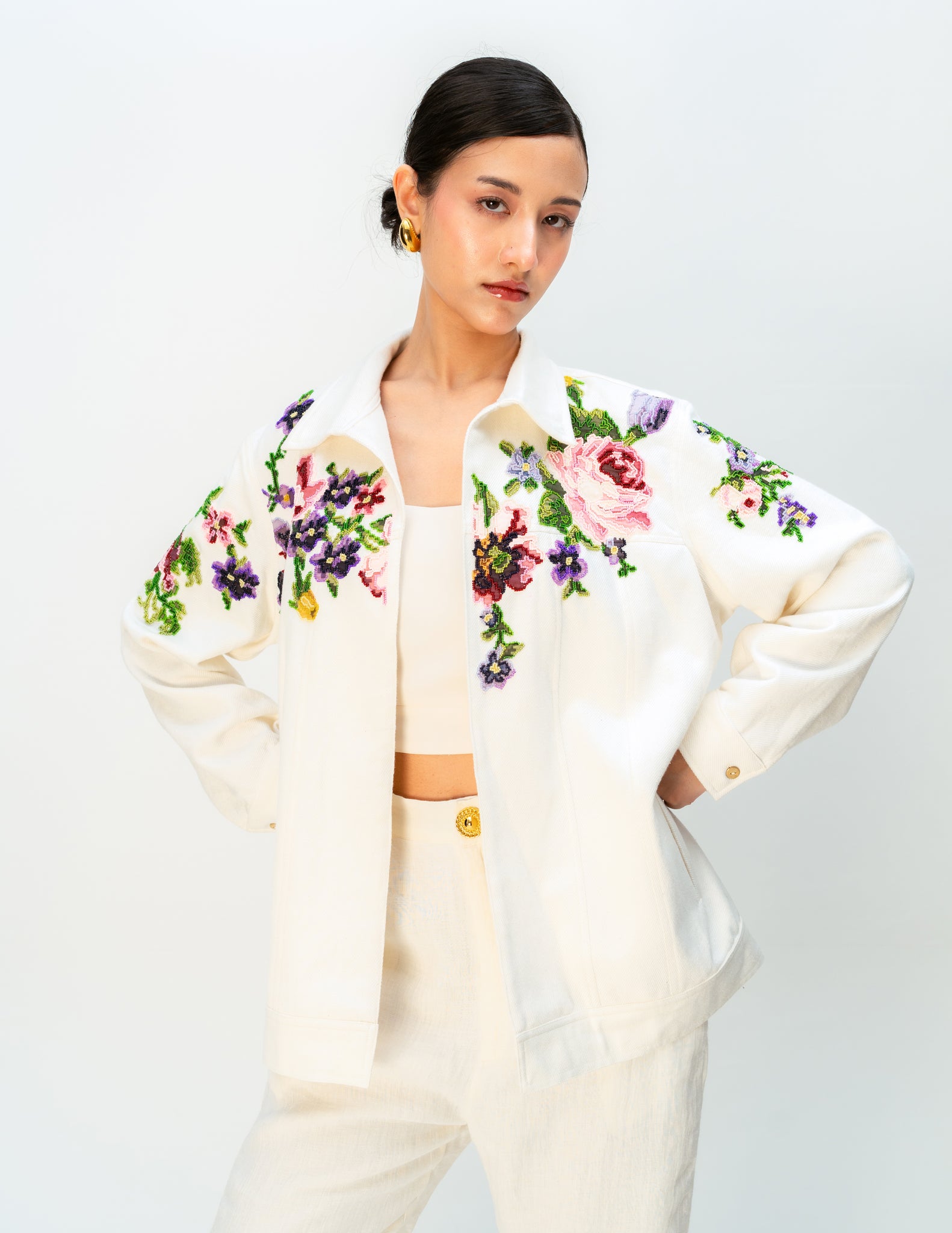
- Notice the individual character: Small variations in stitching, embroidery placement or finishing can naturally occur when a garment involves handwork. These variations can be part of the character of a handcrafted piece.
- Look for the story behind the craft: Brands that genuinely work with traditional or specialised techniques can often share information about the technique, its origins and the artisans, communities or traditions connected to it.
Ultimately, identifying artisanal clothing means looking beyond the finished garment and understanding the skill, process and craft knowledge behind it.
Artisanal Fashion at Ode To Odd
For Ode To Odd, artisanal fashion is closely connected to the craft traditions that shaped the brand from the beginning. Its founders, Shreya and Priyal, grew up around Convent Work, a form of hand cross-stitch embroidery associated with Ranchi. That early familiarity with the craft became an important influence on the brand's approach to contemporary clothing, with the technique continuing to appear across selected pieces.
Artisanal craftsmanship is not limited to one type of garment. Hand embroidery, considered detailing and traditional techniques can be incorporated into dresses, shirts, skirts, outerwear, bibs, co-ordinated separates and other contemporary silhouettes. This allows traditional craftsmanship to be explored across different styles of dressing rather than remaining limited to conventional forms of Indian dress.
You can explore this craftsmanship in selected Kurta Sets, Odhani and Modern Indian designs. The same approach extends into contemporary categories such as Dresses, Bibs and Outerwear, showing how craft-led design can work across different silhouettes and occasions.
Beyond clothing, Bags and Jewellery also reflect the brand's broader interest in handcrafted detailing and considered design.
The focus is not on making every garment identical or presenting traditional craft as something fixed in the past. It is about giving skilled craftsmanship a place within contemporary dressing while remaining specific about the techniques and details behind each piece.
Frequently Asked Questions
Q: What is the difference between artisanal and mass-produced fashion?
Artisanal fashion places greater emphasis on skilled craftsmanship, specialised techniques and considered production, while mass-produced clothing is manufactured at scale using standardised processes designed for efficiency and consistency. The key difference lies in the production approach, scale and role of craftsmanship.
Q: Is artisanal fashion sustainable?
Artisanal fashion can align with slow and sustainable fashion values when it involves considered production, durable design and responsible materials and processes. However, artisanal and sustainable are not automatically the same thing. A garment's overall impact depends on the brand's wider production and sourcing practices.
Q: How do I identify artisanal clothing?
Look for specific information about the craft techniques, production process and craftsmanship behind a garment. Details about hand embroidery, specialised techniques, artisan involvement and smaller production quantities can provide useful indicators. Transparency about how a piece is made is particularly important.
Q: Why does artisanal clothing cost more?
Artisanal clothing can cost more because skilled craftsmanship, specialised techniques and time-intensive handwork require significant labour. Smaller production quantities can also mean fewer economies of scale. The price can therefore reflect the skill, time and process behind the garment, not simply its materials.
Q: Why does artisanal clothing take longer to make?
Detailed techniques such as hand embroidery and hand finishing require individual attention and cannot always be completed at the same speed as standardised manufacturing. When a garment involves multiple craft processes, each stage can add to the overall production time.